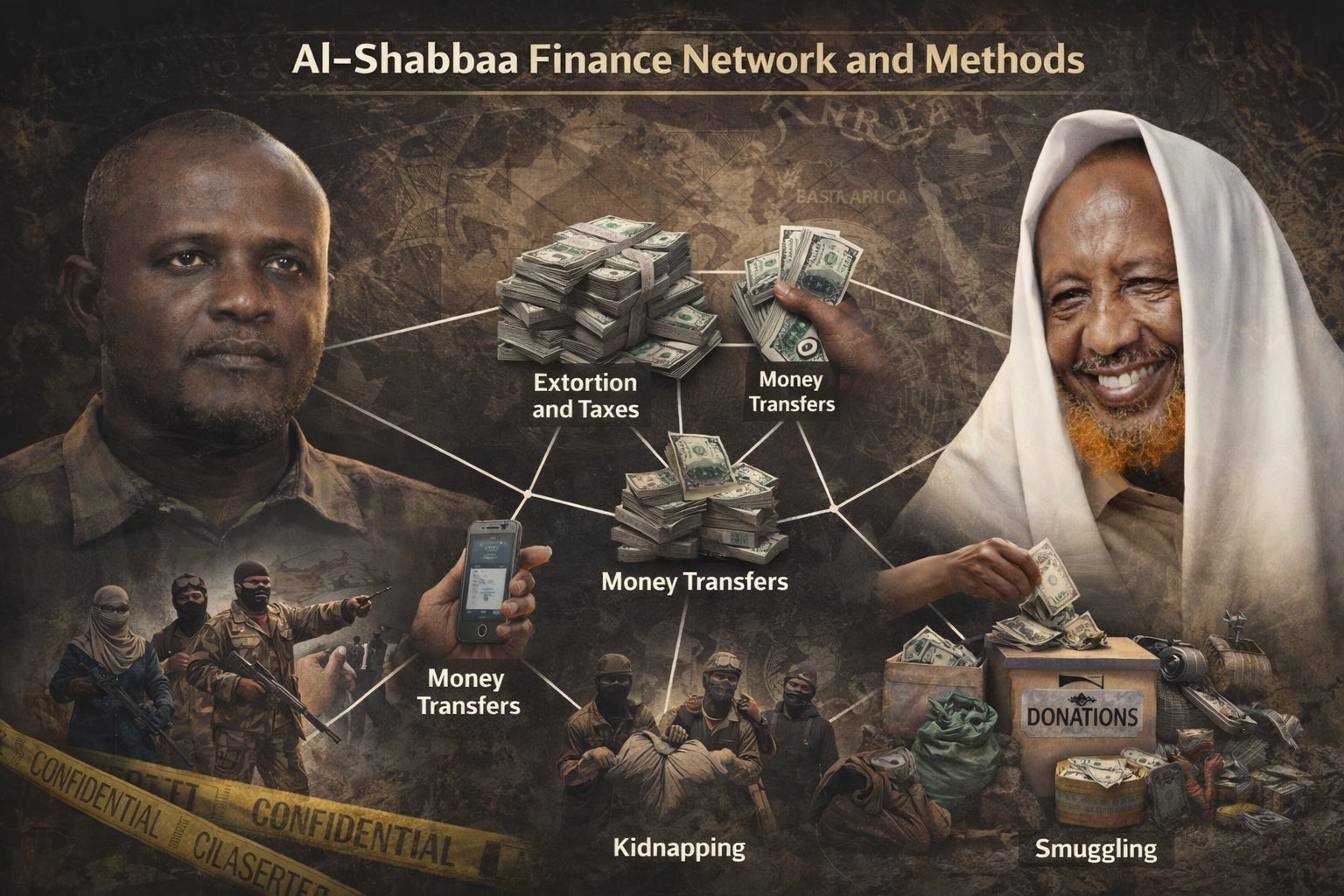
Al-Shabaab is experiencing one of its most severe financial downturns in recent years as sustained counter-financing operations continue to erode the group’s revenue base, according to security sources familiar with internal assessments.
What was once considered one of the organisation’s most resilient pillars, its taxation and extortion infrastructure, is now showing clear signs of strain. Coordinated government measures targeting illicit financial flows have disrupted revenue channels that previously allowed the group to operate with relative consistency.
Sources indicate that repeated efforts to restore income from territorial taxation, market levies, roadside extortion, real estate holdings, and facilitation networks have failed to generate expected returns. Increased enforcement and public resistance have reduced compliance, limiting the group’s ability to extract funds from urban commercial ecosystems.
Business communities in Mogadishu and surrounding areas have reportedly withdrawn cooperation amid tighter monitoring and heightened legal consequences. Analysts describe this shift as a critical turning point, as financial isolation reduces operational flexibility and weakens recruitment incentives.
The deaths of senior figures linked to the group’s financial administration have compounded the strain. Mohamed Mire Jama and Abdullahi Wadaad, both associated with internal revenue management structures, are believed to have played central roles in coordinating collection systems. Their absence has reportedly disrupted internal oversight and slowed financial recovery efforts.
Evidence of liquidity pressure is emerging within the organisation. Reports suggest that fighter salaries have been reduced to below 80 US dollars per month, a move widely interpreted by security observers as a cost-cutting measure driven by constrained cash flow.
At the same time, anti-money laundering enforcement and expanded financial surveillance have tightened oversight at key economic nodes, including Mogadishu’s airport, seaport, and major commercial centres. Enhanced monitoring, CCTV deployment, and undercover operations have increased exposure risks for financial agents and collaborators.
Preliminary financial estimates suggest that the group’s revenue levels in 2025 may represent its lowest intake in seven years, marking a significant contraction compared to previous periods when extortion systems operated with fewer constraints.